

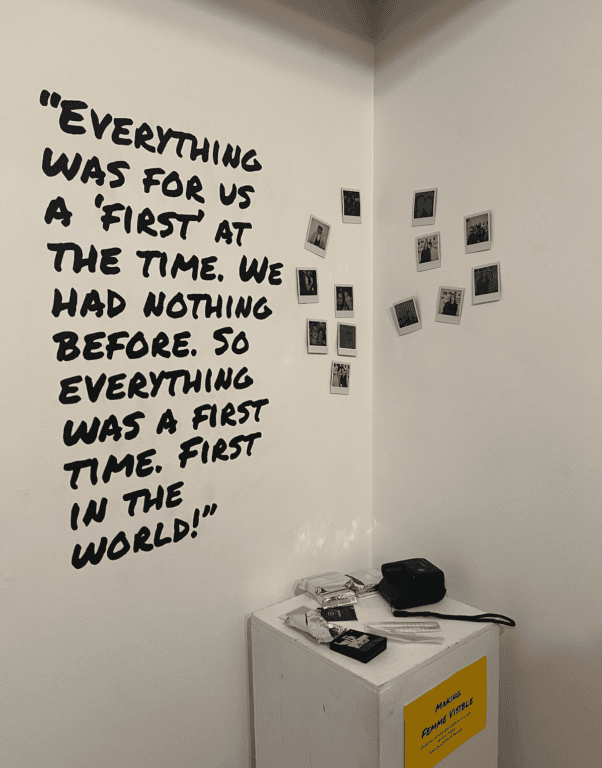
 Perhaps part of what draws us back to the queer cultures of the 1990s is a longing for a time when community seemed less mediated by the perpetual performance of visibility. It is tempting to imagine that connection once felt more meaningful, that community could be born through unremarkable moments of everyday life. That nostalgia deserves scrutiny: the 1990s were neither uncomplicated nor universally welcoming, and queer life carried its own exclusions, precarity and risk. But the longing itself may still reveal something important.
The story of queer and trans femme life in Toronto between 1990 and 2000 is part of a larger history that Chloë Brushwood Rose and Andi Schwartz have spent the past three years researching and documenting for On Our Own Terms: Femme Life and Culture in Toronto, 1990–2000. Drawing on archival materials and nearly 50 oral-history interviews with over 25 narrators, the exhibition assembles fragments of a collective history that had been difficult to find within existing archival collections. Through photographs, flyers, posters, personal ephemera, and conversations, the curators trace a decade of cabarets, literary events, performances, sex-positive spaces, community organizing, festivals, parties, and plays, along with the relationships and everyday encounters that connected them. Their work demanded more than recovering evidence, but meant returning to people’s memories, tracing connections between experiences, and making space for stories that reveal what contemporary queer culture risks forgetting.
The exhibition proved more than a history of events, uncovering something of the people and the places that made these events possible, On Our Own Terms was on view between September 24 and October 18, inviting the public to view a sample of The ArQuives’ own collection along with donated materials from the narrator’s personal collections: posters, photographs, catalogues, a personal library, leatherwear, a wall of event flyers, narrator clips. The full digital exhibition includes most of the gallery’s digitized materials, along with the full interviews and the Femme in the City map, and can now be accessed online, by anyone at any time, inviting us once again to return.
FEMME LEGACY
The project began, in part, with a missing search term. Chloë Brushwood Rose went to The ArQuives looking for femme history and found there was material, but no way to search for femme as a category of experience. Femmes have initiated a disproportionately large amount of community organizing, the curators note, yet their stories are under-represented in community archives. Oral history was a way to bridge that gap, not only by drawing from their personal collections, but by asking femmes to tell their stories.
“Femme” carries many meanings, and many of the exhibition’s narrators describe their own relationships to the word as creative, complex and at times, conflicted. According to the exhibition’s introduction, the term emerged from working-class lesbian bar culture in the 1940s and 50s, and from the 1960s it was also used by trans women of colour in Harlem’s drag and ballroom cultures. The curators suggest that these lineages, along with the marginalization of femmes in the lesbian-feminist communities of the 70s and 80s, helped spark a renaissance of femme culture in the 1990s, when queer femmes articulated the terms as a gender experience “on its own terms.”
FEMME LONGING
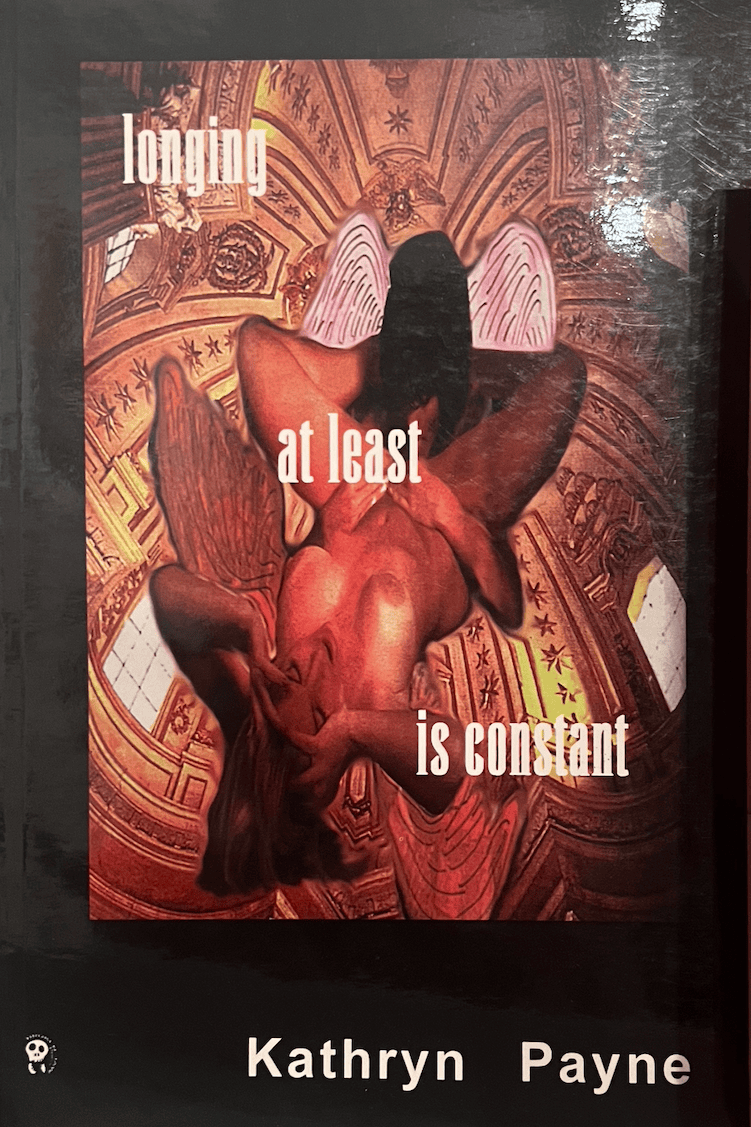 Nostalgia can flatten the past into an ideal, but it can also point toward something we struggle to name in the present. When we look back to a particular decade, what we are missing is not the moment in time itself, but the social conditions that allowed people to become familiar with one another and the spaces we returned to in search of ordinary time together. Chloë Brushwood Rose describes this nostalgia for a time when we once felt more connected to each other as “a very sincere longing for something that feels more authentic.” Through the process of researching the exhibition, she explained the curators had time to recognize that “maybe part of this project has been also discovering that longing is sincere and has some real value, and it’s not about nostalgia for some imagined idealistic time.”
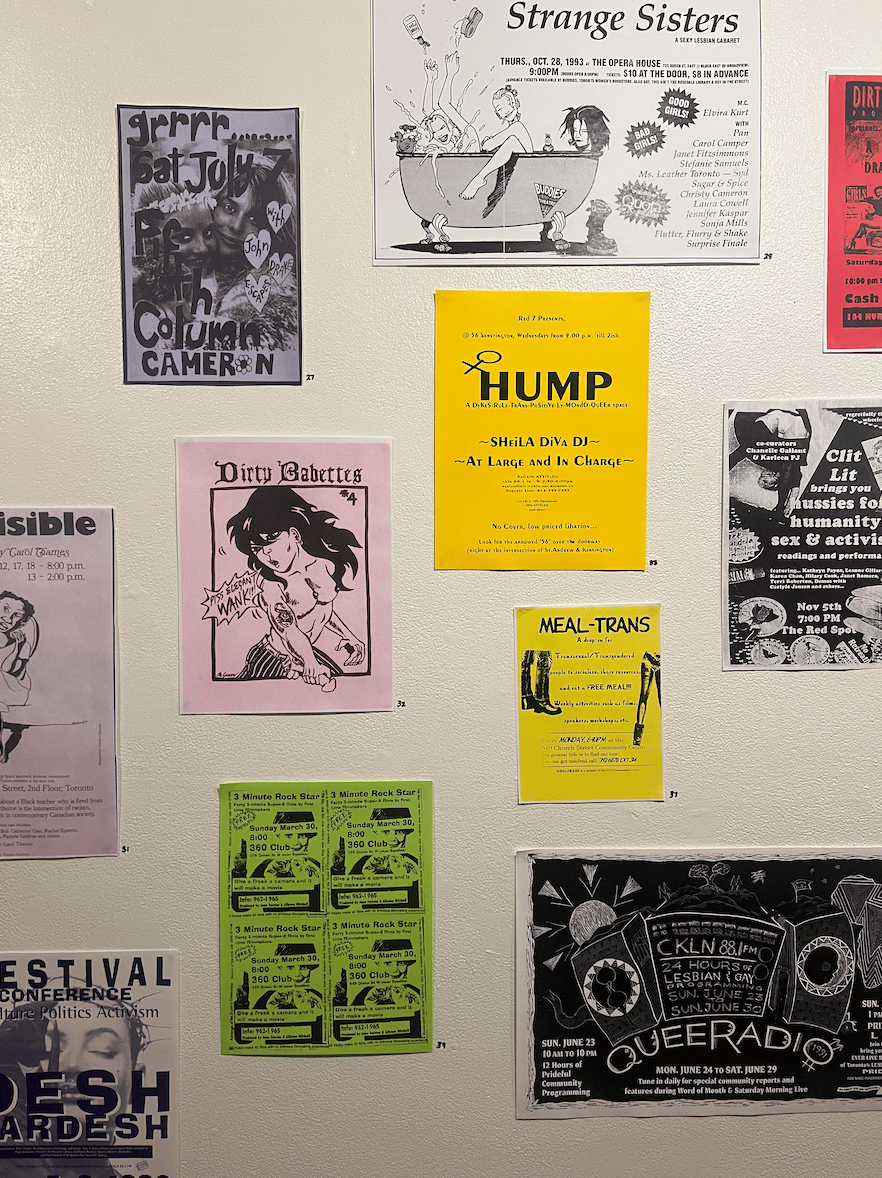 On Our Own Terms documents more than a hundred femme-led events and projects in Toronto across a single decade, and it would be easy to read this history as a succession of lively nights out: the Dungeon party posters at Buddies in Bad Times from 1995, the programme for the third Counting Past 2 trans arts festival, a 1993 listing for Strange Sisters, the flyer for Clit Lit’s queer women writers’ reading series. But these materials preserve more than evidence of our history. They offer glimpses into a time when femme community was built not only through events themselves, but through the simple, repeated act of showing up. Brushwood Rose and Schwartz’s preservation of these histories is a legacy in its own right: a record of the world femmes made together, and of the lives that made them possible.
The curators do not claim to have a definitive answer to what has changed, but they point to a few conditions. Toronto was smaller and cheaper then, even adjusted for inflation, which left people more time and money to take risks. The issues they tackled felt closer at hand, and organizing seemed to bring more immediate results. People called each other out on stage and fought at the bar, in person, where today we argue online. In a digital culture that gives us more ways than ever to reach one another, the exhibition invites us to consider the difference between having somewhere to go and somewhere to belong.
TORONTO AS A CHARACTER
The digital exhibition’s Femme in the City section maps 56 locations tied to narrators’ memories of Toronto, tracing a social ecosystem across bars, bookstores, community centres, sex-worker spaces, trans organizing workshops, and apartments where people gathered. From the Legion Hall at Queen and Spadina, to Cameron House, to the Women’s Bookstore, Toronto emerges from the exhibition not merely as a vibrant epicentre for uniquely femme cultural production, but as one of its protagonists: a city continually remade by the people who gathered within it, the spaces they claimed, and the relationships that connected them. As Andi Schwartz explains, “this project is really affirming physical space, space together. And that’s where the nostalgia of the 90s comes in.”
Many of the project’s narrators spoke of Toronto’s appeal during their interviews, which can be accessed online In Our Own Words, describing the city not simply as a place where queer culture happened to exist, but as a place where people negotiated, contested, and remade the terms of belonging simply as somewhere queer culture happened to exist, but somewhere people negotiated, contested, and remade the terms on which they could belong. One narrator described the tension of navigating the city’s queer geography, highlighting the femmephobia and racialized expectations that could shape who felt welcome in particular venues. When recalling criticism of her miniskirt at an event, she remembered responding: “No, you don’t get to do that here. This is Toronto.” For another, the first sight of a femme in a Toronto bar was proof of a possibility: “that’s possible here?”
On Our Own Terms refuses to romanticize the past, making its account of Toronto even more meaningful. The city offered opportunities for creative work and political collaboration, but not everyone experienced its spaces in the same way. Included in the exhibition, narrators describe racism, biphobia, transphobia, femmephobia, fatphobia, slut-shaming and emphasize that one’s ability to belong was shaped by race, gender, class, sexuality, and access to resources.
And although there were many cultural forces that shifted how we thought of gender and sexuality broadly, narrators describe how trans women and sex workers stood at the centre of Toronto’s queer history. When we take time to remember how interconnected our histories are, Chloë revealed “how absolutely crucial trans spaces and trans women were to the ability for dykes, whether they were trans or cis, to think differently about their own gender identity.” Toronto, she says, “had some of the most amazing trans organizers,” and the city’s different politics came “in part because of their work.” It was a hard time, and a generative one, and the exhibition keeps both in view.
SOMEWHERE TO RETURN
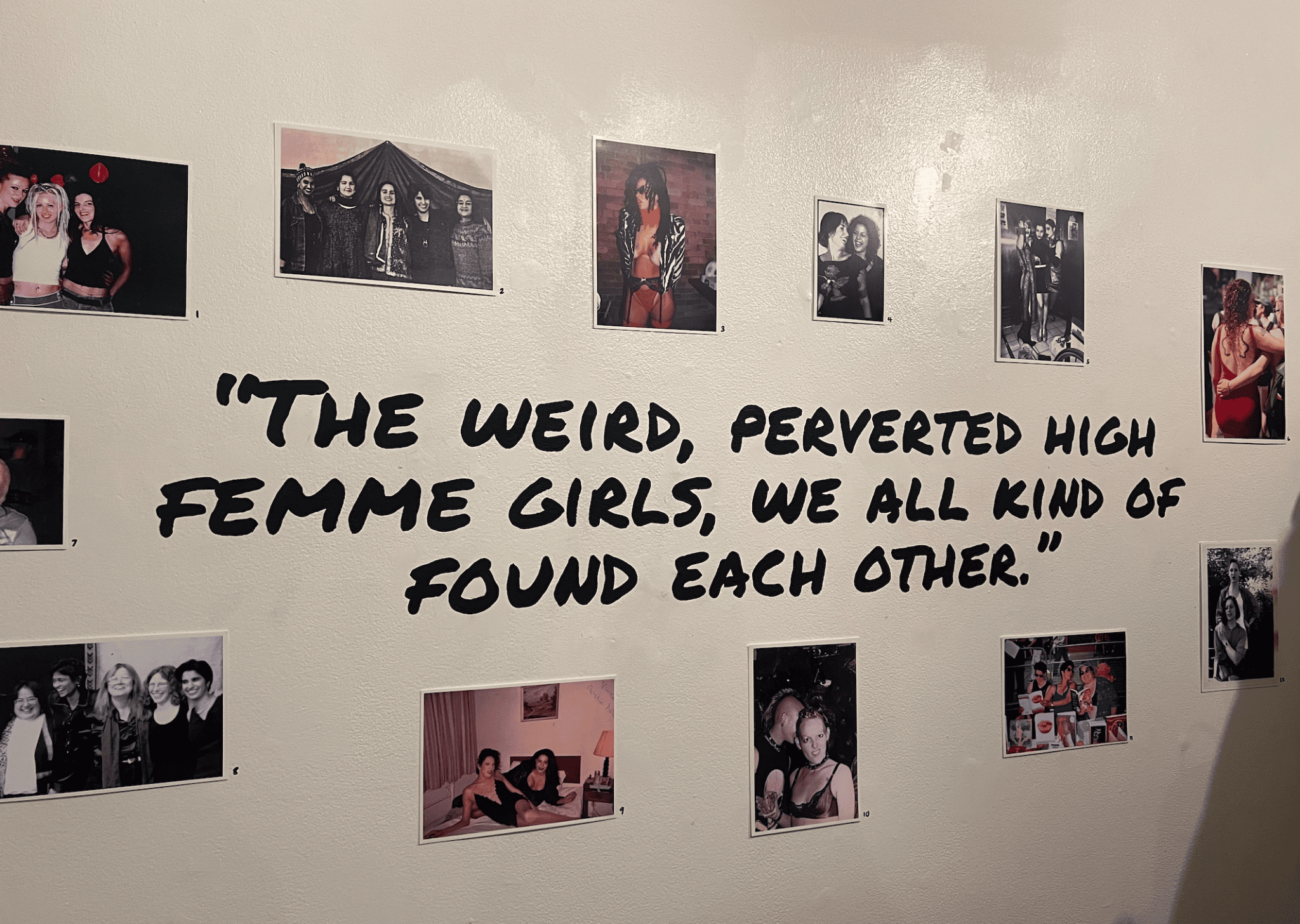 An archive cannot return us to the conditions under which these communities formed, nor can it resolve the exclusions and uncertainties that shaped them. But it can show us what became possible when people had somewhere to gather, to experiment, to exist freely in a space, and to keep returning. Chloë observes that, “it takes a while for people to realize they were a part of something… At the time, it probably felt like hanging out with our friends.” On Our Own Terms reminds us how the most ordinary moments can become historical when someone takes the time to recognize their significance.
The exhibition does not ask us to return to an idealized past. It asks us to show up: to explore the map, listen to the interviews, find a place we recognize and, if we were there, to share what we kept. It is a beginning, a gathering of oral histories and archival fragments that will remain accessible through The ArQuives, open to anyone who wants to listen, contribute and continue the work of remembering. Community was never something that happened only once, in a decade. It is a practice, repeated and kept alive by people who may not yet know they are making history.
On Our Own Terms: Femme Life and Culture in Toronto, 1990–2000 is an exhibition curated by Chloë Brushwood Rose and Andi Schwartz, presented by The ArQuives and funded by the Social Sciences and Humanities Research Council of Canada. Visit the digital exhibition today.
Author bio
Sarah-Emmanuelle Ruest is a creative producer and experiential events curator dedicated to impactful storytelling and the artistic practice of organizing, planning, collaborating, and bringing ideas to life. She is currently preparing to pursue her Masters in Library Information Sciences with a focus on digital archiving and self-documentation.