

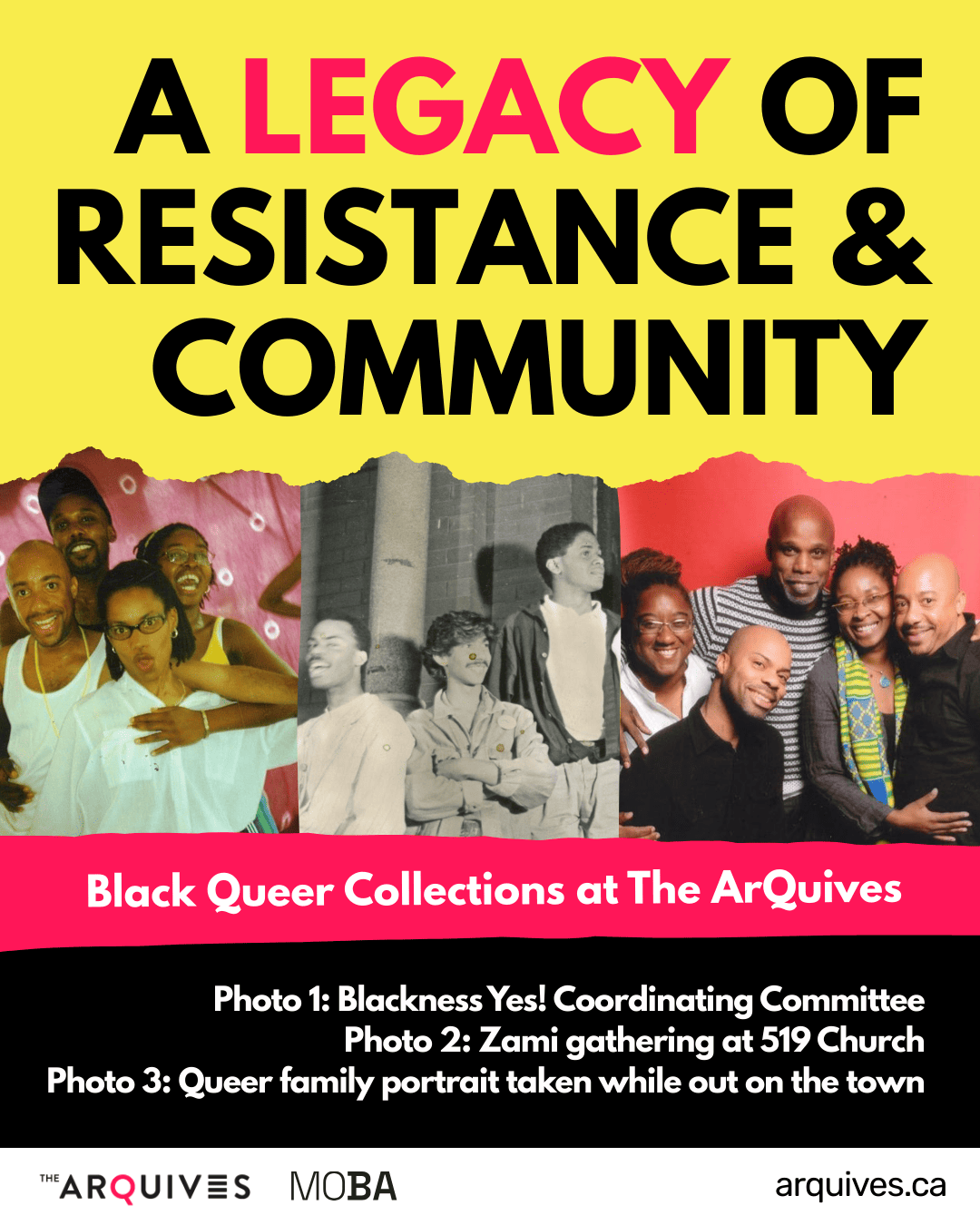

Queer family portrait taken while out on the town – Photographed by Rose-Ann Marie Bailey, Circa 2012, Toronto, Ontario, Gift of Courtnay McFarlane, Courtesy of The Family Camera Network and The ArQuives, (L-R) Dionne Falconer, Courtnay McFarlane, Douglas Stewart, Angela Robertson, and Junior Harrison. https://digitalexhibitions.arquives.ca/ exhibits/show/queeringfamilyphotography/ item/992
The late 1970s and early 1980s were a time of radical change. The civil rights, gay and lesbian liberation, and women’s movements were reshaping North America, challenging the status quo, and demanding justice. In Toronto, Black queer activists were building spaces, creating art, and making their voices heard. Their stories live on at The ArQuives, Canada’s largest independent 2SLGBTQIA+ archive.
The ArQuives acquires, preserves, organizes, and gives public access to information and materials in any medium, by and about 2SLGBTQIA+ people, primarily produced in or concerning Canada. Its shelves, attic, basement, reading room, library, and two offsite storage facilities house a wealth of ephemeral items and pivotal moments in Canadian 2SLGBTQIA+ history. Within its walls, you’ll find a powerful collection of interviews, periodicals, books, and ephemera that help piece together history.
One of the more intimate ways to learn about this history is listening to the voices themselves. The ArQuives holds records and interviews with and about key figures like Makeda Silvera, Courtnay McFarlane, Junior Harrison, and Douglas Stewart, whose contributions were integral to the growth and strength of the Black queer community in the city.
“Family for me has been broadly defined. It’s the family into which I was born as well as the family at different stages of my life have chosen. Within the queer context that family that has nurtured and supported me, I really feel literally, are more significant in my life than my biological family.” – Courtnay McFarlane

Mark Reid, “Douglas Stewart (1962 – ),” The ArQuives Digital Exhibitions, https://digitalexhibitions. arquives.ca/items/show/150.
In his interview for The Family Camera Network Project, poet and artist Courtnay McFarlane reflects on his mother’s photo album, flipping through pages of his past. You can hear the sounds of Isabella Street, where The ArQuives has been housed since 2006 in the background —a historic building itself, now over a century old. The bustling street noises juxtapose the intimate stories being shared.
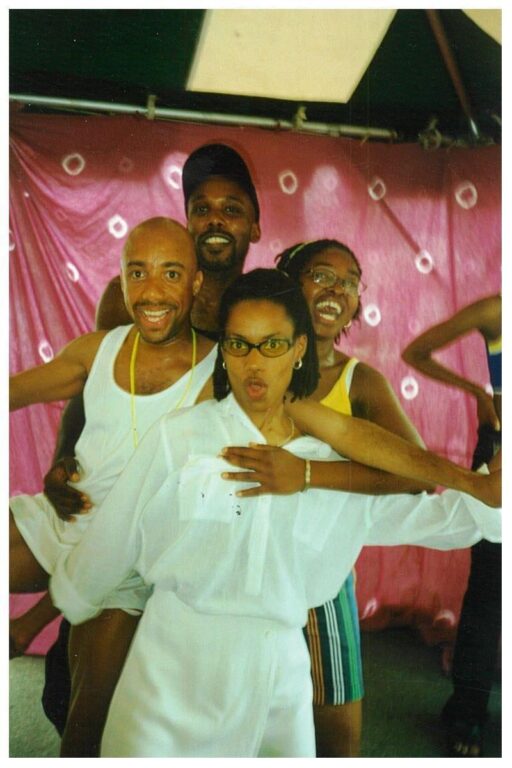
Within the same fonds, HIV/AIDS activist Junior Harrison reflects on various outreach and organizing events he was involved in, recalling particular memories of Black Coalition for AIDS Prevention’s (Black CAP) presence at Caribana, held every August in Toronto.
In a 2001 interview with Nancy Nichol, gay rights activist Douglas Stewart provides another critical narrative of 2SLGBTQIA+ activism in the late 20th century. Stewart traces his activism from coming out in 1978 to his involvement in organizations such as Lesbian and Gay Youth Toronto, ZAMI, Anti-Apartheid Committee, and Reunited African Youth (RAY).
McFarlane met Stewart through ZAMI; a lesbian and gay Black and Caribbean group formed in Toronto in the 1980s. ZAMI is a West Indian Creole word for lesbian, and was also the title of Audre Lorde’s important 1982 biomythography, Zami: A New Spelling of My Name. Although the group’s focus was on the Black community, members of Toronto’s queer Caribbean diaspora were welcome.

“Zami gathering at 519 Church,” The ArQuives Digital Exhibitions, https://digitalexhibitions.arquives.ca/items/show/993.
In the image above, Anthony Mohamed, a gay, South Asian, Caribbean, Canadian activist stands with his arms crossed wearing a jean jacket at a ZAMI gathering. For decades, Mohamed has been a pivotal figure in various advocacy groups and organizations spanning decades. These groups include ZAMI, Khush, and the AIDS Committee of Toronto.
ZAMI’s primary purpose was visibility, according to Stewart, “People felt like something needed to be available so that Black people could find a place to go. By seeing something in a newspaper that said Black and gay together, they came.” Stewart describes ZAMI as a space that fostered political dialogue, discussion, and support.
“People really connected because it was a very small activist community.” – McFarlane
In one interview indexed at The ArQuives, McFarlane shares a flyer for Lesbians Gays + Race, an event in collaboration with Gay Asians of Toronto, which included a screening of Orientations and earlier film of Richard Fung. McFarlane was also involved with Lesbians of Colour, a group that, alongside other organizations, helped form the foundation for a supportive network of queer people of color.

Flyer for Lesbians Gays + Race event held on Feb 15, 1985. The ArQuives.
Photograph of the Blackness Yes! Coordinating Committee. Pictured: Doug Stewart, Angela Robertson, Jamea Zuberi, and Junior Harrison. Copyright Blackness Yes!., Type of Material: Photograph, Publication Date: 1999
At The ArQuives, a vertical file for Lesbians of Colour (Toronto) contains flyers, newspaper clippings, and resources. These materials illustrate the growing importance of grassroots organizations in uniting the diverse threads of queer and Black communities, and how their work laid the foundation for future movements like Black CAP.
“[Black CAP] existed because ZAMI existed, Lesbians of Colour existed, Black Women’s Collective existed,” McFarlane reflects.
In Junior’s 2017 interview with Family Camera Network he shares what brought him to Black CAP, “I had this yearning… to find other people living with HIV to see what they were doing, how they were doing, maybe learn,” Harrison said.
“I was determined to find other people, because I felt like it was a part of my survival.” – Harrison
Black CAPs logo, designed by McFarlane, features Adinkra symbols used by the Ashanti people in Ghana. Each of the symbols represent some kind of proverb or saying – he chose “hope,” “strength,” and “we are connected.”
Harrison shares, “Every year, [Black CAP] still participates in the Caribana parade, wearing bright-colored T-shirts that say, ‘Ask me about rubber wear!’ [was] such an incredible experience… we would walk the route, handing out bags filled with condoms, lube, and informational materials.”
The interviews at The ArQuives also shed light on the early days of Blackness Yes! and Blockorama, an annual celebration of Black queer culture during Toronto’s Pride celebrations. McFarlane can recall the challenges Black queer organizers faced in securing space and visibility, long before the Black Lives Matter movement brought attention to systemic exclusion in 2016.
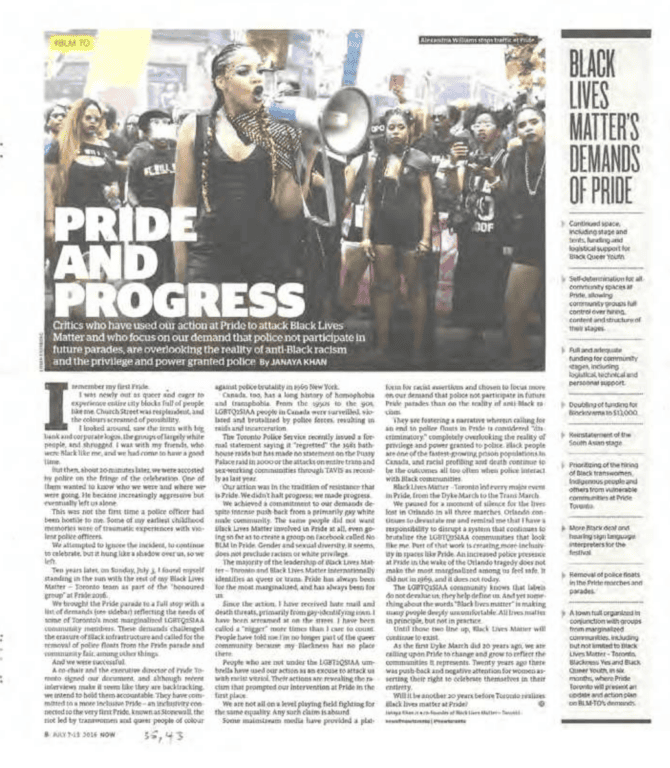
Khan, J. (2016, July 7-13). Pride and Progress. NOW. Black Lives Matter – Toronto Vertical file. The ArQuives: Canada’s LGBTQ2+ Archives. Toronto, ON. https://collections.arquives.ca/ link/verticalfile28529.
In McFarlane’s interview, we are reminded of how the neglect of Blockorama by Pride organizers led to a town hall where queer organizers confronted officials. McFarlane emphasizes its political origins and its significance within the larger queer movement.
“The activist origins of the event and the political spirit of our event, our presence, visibility, organizing, marching was completely lost to folks who see it as a big party.” – McFarlane
Beyond the collections at The ArQuives, there are other sites of memory pending formal recognition. One such place is Dewson House, a home for Toronto’s queer people of color, where many community members found solidarity and strength during a time of great struggle.

Stephanie Martin, “Makeda Silvera (1955 – ),” The ArQuives Digital Exhibitions, https://digitalexhibitions. arquives.ca/ items/show/147.
Makeda Silvera, a renowned Jamaican-born writer, was a founding member of the 101 Dewson Street collective house. Along with her partner Stephanie Martin, she co-founded Sister Vision Press, a publishing collective dedicated to amplifying the voices of queer women of color—especially Black women. Through writing, publishing, and organizing, Silvera helped carve out space for stories that mainstream publishers often ignored.
Dede Akolo wrote about Dewson House, Silvera shared an overview of Dewson House for CBC, and Emma Awe (previous recipient of The Brian King Fabulous Researcher Fund) produced a zine about Dewson House. Martin later created a mixed-media portrait of Makeda for The ArQuives National Portrait Collection, which also features Stewart’s portrait.
The Black queer history preserved at The ArQuives extends far beyond these interviews, portraits and flyers. The ArQuives continues to thrive as a living archive, its ever-expanding collection documenting the stories of Black queer activism and its profound influence on the broader narrative of Canadian 2SLGBTQIA+ history. These materials are indispensable for research and education, and more than ever, to show that Black queer people have and continue to exist.
Author: Syriah Bailey is an interdisciplinary creative thinker focused on inclusive data practices and storytelling. Their portfolio includes curating film festival programs, providing consulting and evaluation to predominantly queer and trans-serving organizations, and leading communications at The ArQuives. Bailey holds a Masters in Postcolonial Culture and Global Policy.
This piece was originally published on Mapping Ontario Black Archives in two parts.