


The ArQuives congratulates Bee Khaleeli, Drew McEwan, Ian Danger Capstick, and Scarlett Gillespie AKA Jelena Vermilion as recipients of The Brian King Research Fellowship and The Alan Miller Research Fellowship.
In 2016, The ArQuives created The Brian King Fabulous Researcher Fund to honour the memory of former volunteer Brian King, one of the original Flashback Gala creators, whose enthusiasm and devotion to the organization remain legendary. Brian was known for his support for those just starting out in life, and this fund enables researchers to access our collections, particularly those who might not otherwise be able to travel to The ArQuives in Toronto.
In 2026, Alan Miller entered his 50th year as a volunteer and supporter of The ArQuives, and we are commemorating this occasion with a new fellowship in his name. His dedication to the collections, particularly the periodical collection, is unmatched, and researchers from around the world have benefited from his commitment, knowledge, and support. This fellowship ensures that researchers will continue to benefit from his exceptional work for years to come.
Learn more about the 2026 fellows:
 Bee Khaleeli (she/they)
During The Alan Miller Research Fellowship, Bee plans to explore how sex work is represented and invisibilized in archival collections. Specifically, she will use The ArQuives’ holdings to better understand how sex work histories and activism can be documented and narrativized in the face of ongoing stigma and criminalization.
“The Alan Miller Research Fellowship will provide me with an invaluable opportunity to explore subject matter that has historically received little attention in archival scholarship. I am grateful to The ArQuives for their generous support of this project.”
 Drew McEwan (she/her) is an Assistant Professor (Limited Term Faculty) in Toronto Metropolitan University’s School of Disability Studies. Her academic work has appeared or is forthcoming in The Canadian Journal of Disability Studies, The Journal of Literary and Cultural Disability Studies, TSQ: Transgender Studies Quarterly and the anthology Literatures of Madness: Disability Studies and Mental Health. She is also the author of the poetry collections Repeater, If Pressed, and Tours, Various ly.
During The Alan Miller Research Fellowship, Drew will be writing her book, titled, Mad Trans Difficulty, which is under contract with Ohio State University Press. Mad Trans Difficulty will analyse representations of transfemininity to consider how trans women are rendered as mad, maddened, and maddening subjects. It will develop an idea of difficulty, theorized at the intersection of madness, transness, and femininity, that is both an imposed position of social marginalization, but also a site of mad-affirmative and trans resistance to cisheteronormative reason. Framing transfemininity as culturally mad and difficult, this book analyses a diverse range of transfeminine representation that brings together madness, social difficulty, experiential mental distress, and political expendability.
“As Alan Miller Research Fellow, I am thrilled by the opportunity to bring analysis of material from The ArQuives collection into my book project. I’m looking forward to closely interacting with the archives of the ways trans women have historically and at present navigated medicalization and social maddening.”
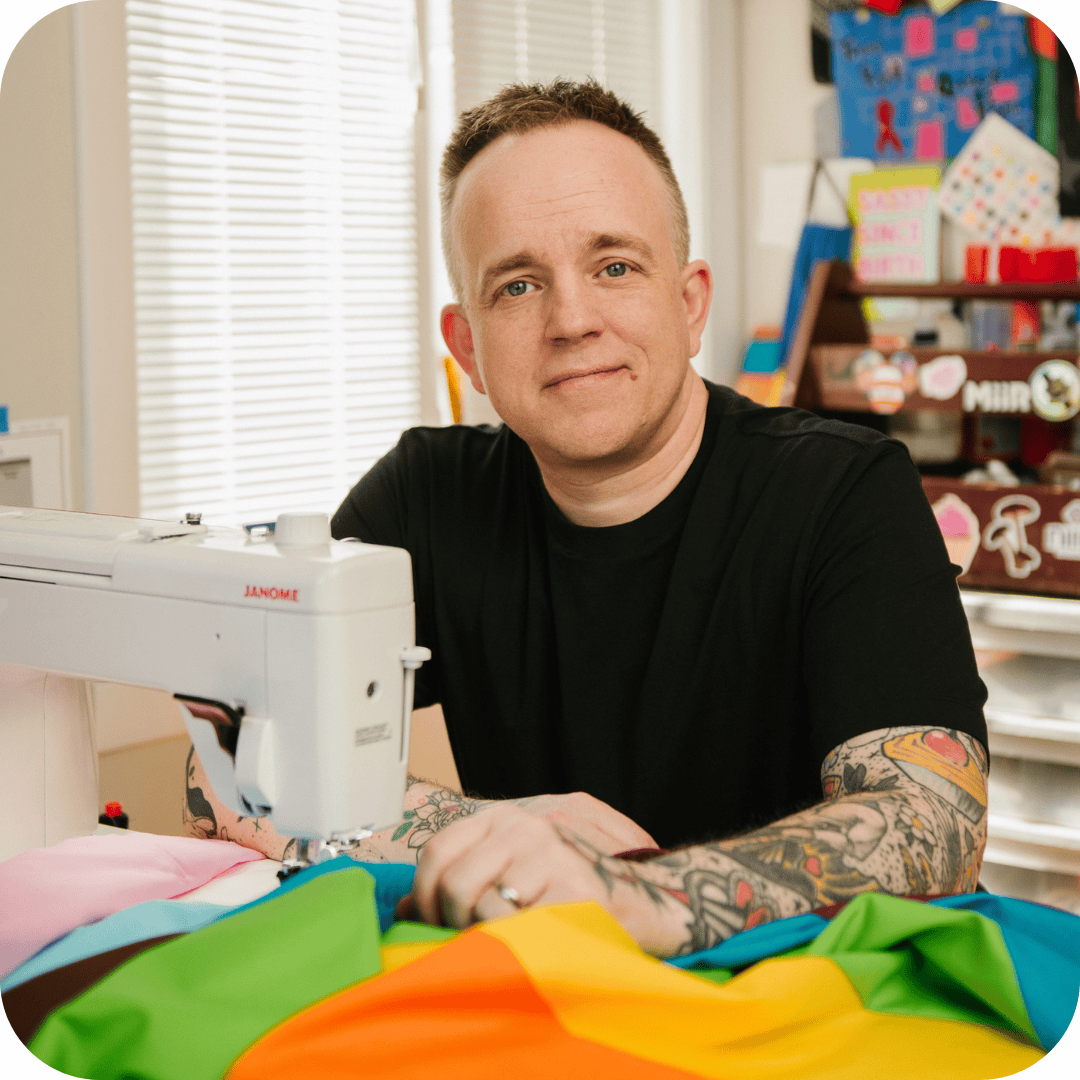 Ian Danger Capstick (he/him) is a Montréal based textile artist whose quilts trace queer history through archival research, reinterpreting and reanimating historic photographs using reclaimed fabric. He spent two decades in politics, including work as press secretary to Jack Layton and as an advisor to Gord Downie and the Wenjack family on the Downie & Wenjack Fund, before turning to quilting as a slower kind of activism. He hosts the documentary podcast Art Against Empire and facilitates the LGBTQIA+ Room on the Quilty Nook.
During The Brian King Research Fellowship, Ian will research The ArQuives’ archival photographs and moving images to recover handmade queer protest signs that exist only as fragments. These include the painted tablecloth from the 1971 We Demand rally and the cardboard signs from the 1981 bathhouse-raid protests. He’ll recreate five to ten of them as life-size quilted textile works. With permission from the Gerald Hannon estate, he’ll also create a photo-based quilt of Hannon’s bathhouse-raids photography, with undercover police he has identified in the crowd “o-glitter-ated” in reflective fabric. The original signs were ephemeral, but the quilts are not. Photo by Alex Tran.
“Days before this news arrived, I was interviewing Cleve Jones about the hand-painted posters that inspired him to create the AIDS Memorial Quilt. The Brian King Research Fellowship lets me follow that thread with the team at The ArQuives, and bring back, in fabric, signs that disappeared almost as soon as they were made.”
 Scarlett Gillespie AKA Jelena Vermilion (she/her) is the Executive Director of the Sex Workers’ Action Program (SWAP) Hamilton and a researcher focused on the histories and experiences of sex workers in Canada and across the world. Her work draws on archival records, legal documents, and community knowledge to examine systemic erasure, discrimination, and resistance. She is recognized for advancing sex workers’ rights through advocacy, research, and public education. Photo by Danielle Donville / YWCA Hamilton..
During The Alan Miller Research Fellowship, she will examine how sex workers are represented, obscured, or omitted within collections at The ArQuives. Drawing on periodicals, organizational records, and community publications, she will explore sex workers’ contributions to queer organizing, mutual aid, and cultural life which are often marginalized or undocumented. Using a critical, community-informed archival approach, the research considers how stigma, criminalization, and respectability politics have shaped what is preserved. By centering both archival silences and existing materials, the project aims to expand understandings of queer history in Ontario while foregrounding sex workers as organizers, knowledge producers, and central participants in queer communities.
“Being awarded The Alan Miller Research Fellowship is deeply meaningful to me, as it affirms the importance of preserving and telling sex workers’ histories with care and integrity. This support makes it possible to continue work that honours those who have been erased, while building a record that can inform justice, memory, and change.”